
Website monitoring for supply chain and procurement
Track supplier catalog changes, pricing updates, lead-time shifts, and inventory availability across the supplier network.
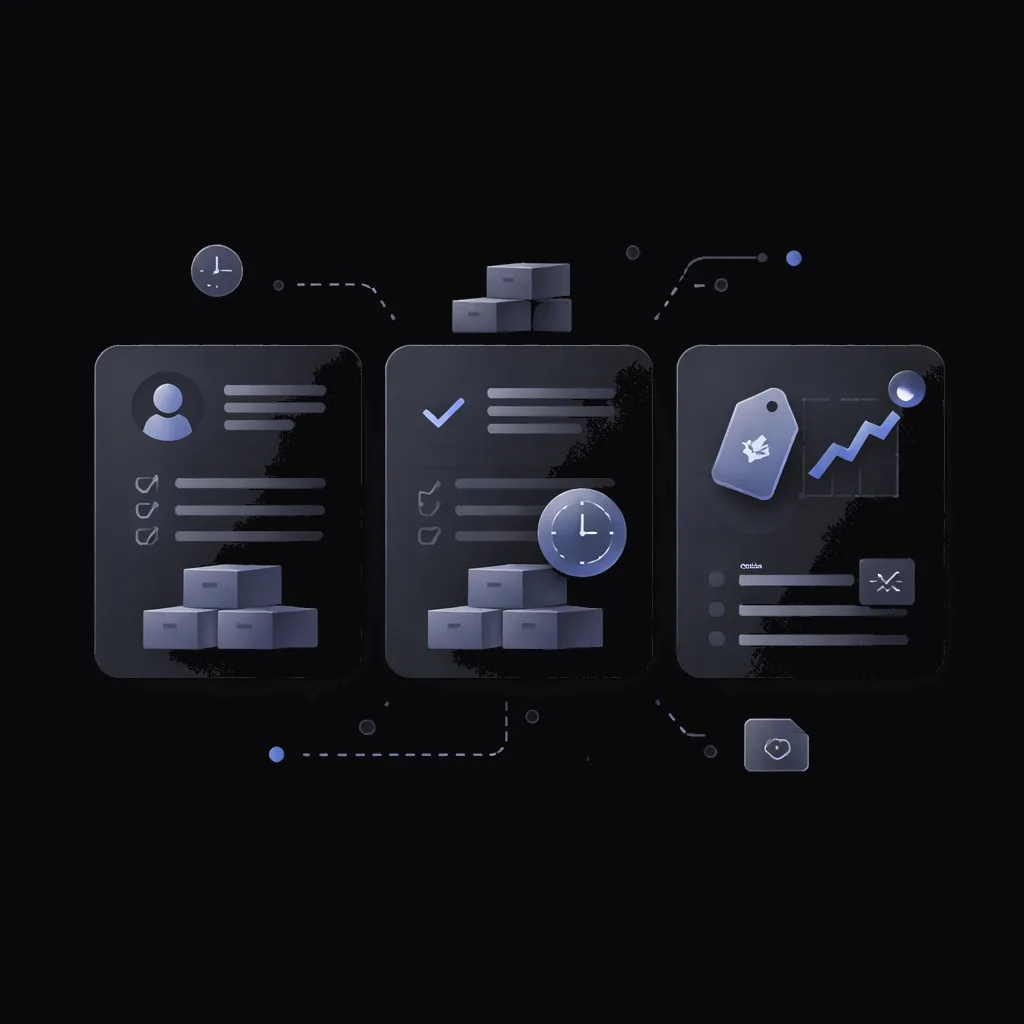
Procurement and supply-chain teams operate against suppliers whose catalogs and lead times change constantly and rarely come with notification. WebMonitor.fyi tracks supplier pages, distributor catalogs, raw-materials index pages, and freight-tracking portals for the changes that matter — price increases, lead-time extensions, discontinuations, and new product introductions.
Key monitoring challenges in this industry
Supplier catalog and price visibility
When a supplier silently raises prices or extends lead times by a week, procurement finds out three orders later. Monitoring the catalog page catches it within a day of the change.
Multi-supplier comparison
For commodity inputs, watching three or four suppliers in parallel helps procurement time orders and negotiate. One dashboard, multiple supplier monitors.
Discontinuation and EOL tracking
Discontinued parts and end-of-life products show up on supplier pages before the formal notification reaches the buyer. Catching it early means time to qualify a replacement.
Raw-materials index monitoring
Commodity indices (CME, LME, oilprice.com, sector-specific trackers) move daily. Operations teams use the data for forward planning and hedging discussions.
Recommended monitoring for this industry
Solution
Price monitoring
Track the product pages you care about most from one dashboard. Plain-English rules, email, Slack, and webhook alerts, checks as often as every 30 minutes.
Read moreSolution
Supplier monitoring
Track competitor product launches, pricing changes, hiring activity, and content publishes from one dashboard. Alerts arrive within your check interval — as often as every 30 minutes — on the channel the team already watches.
Read moreHonest limits
WebMonitor tracks public supplier catalogs, distributor product pages, and commodity index pages. Authenticated supplier portals, EDI feeds, contract-specific pricing tiers, and ERP-integrated catalogs all require dedicated integrations rather than a public-page check. Real-time exchange-traded commodity data still needs a dedicated market data feed — public index pages refresh on a slower cadence than the underlying market.
Frequently asked questions
Can I monitor a supplier portal that requires login?
Login-gated supplier portals are outside the standard product's scope — they require authenticated integrations. Public catalog pages, public price lists, and public product detail pages work directly.
Does this work for distributors like McMaster-Carr or Grainger?
Yes. Each product page on a public distributor catalog is a monitor URL. Track pricing, availability, and lead time per SKU.
Can I track commodity prices?
Yes. Public commodity index pages (oilprice.com, kitco.com for metals, freight indices) work as monitor sources. For real-time exchange data, dedicated market data feeds are still required.
How many monitors does a typical procurement team run?
Plans include up to five monitors, so procurement teams point them at the highest-impact pages: the top supplier's price list, a critical SKU's product page, a commodity index. Update the URLs as sourcing priorities change.
Related
Solution
Price monitoring software for any website
Track the product pages you care about most from one dashboard. Plain-English rules, email, Slack, and webhook alerts, checks as often as every 30 minutes.
Read moreSolution
Competitor monitoring and competitive intelligence
Track competitor product launches, pricing changes, hiring activity, and content publishes from one dashboard. Alerts arrive within your check interval — as often as every 30 minutes — on the channel the team already watches.
Read moreTry it on the page you want to monitor
Free to try. No credit card. Paste a URL, write a criterion, see the analysis.
Start free