
Competitor monitoring and competitive intelligence
Track competitor product launches, pricing changes, hiring activity, and content publishes from one dashboard. Alerts arrive within your check interval — as often as every 30 minutes — on the channel the team already watches.
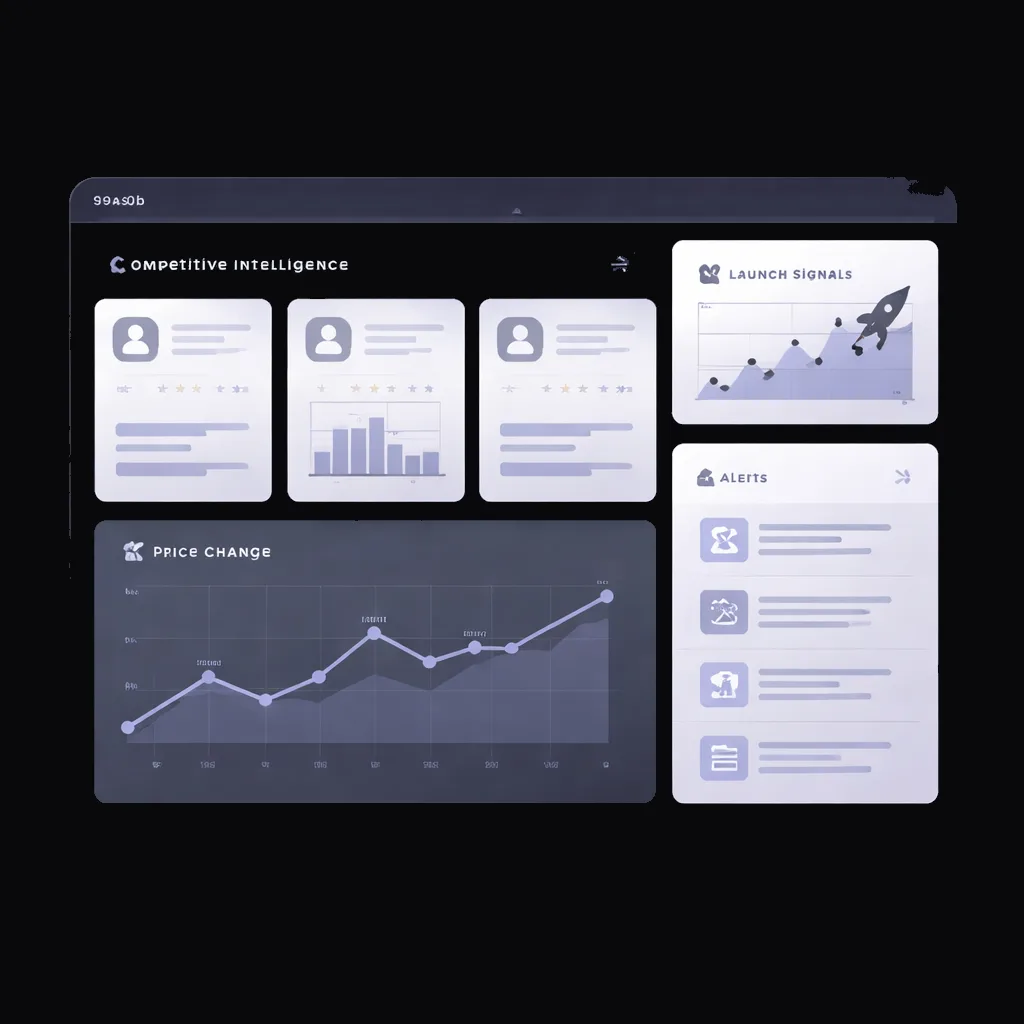
Competitor monitoring is the systematic tracking of public-facing signals from your competitors: pricing changes, product launches, hiring activity, content publishes, press coverage, and feature announcements. Done manually, it requires a person checking dozens of pages on a weekly cadence and missing most changes between checks. WebMonitor.fyi automates the polling and alert layer so changes surface within your check interval instead of at the next manual review. Built for product, marketing, sales, and strategy teams to maintain competitive awareness without a dedicated analyst.
What it does
Multi-page competitor coverage
Pricing page, product page, careers page, blog, press section, changelog — each page is one monitor, and plans include up to five, so point them at the pages where a change would actually move your roadmap or messaging.
Plain-English criteria
Write rules like "alert me when this competitor publishes a new blog post about [topic]" or "notify me on any pricing page change".
AI change summaries
Each alert describes what changed in plain English — new copy, a removed plan, reworded positioning — based on a comparison against the stored baseline. Useful for spotting positioning shifts.
No alert noise
Smart deduplication means an unchanged page never re-alerts. You hear about each change once, on the first check that sees it.
Webhook into Slack
Most competitive intelligence work lives in Slack. A webhook posts each detected change to a channel with the diff and a link.
How to set it up
List the pages worth tracking
Highest-signal first: pricing, then the changelog or blog index, then careers or press. Plans include up to five monitors, so prioritize the pages where a change matters most.
Add each as a monitor
Paste the URL and write the criterion ("any change", "new entry added", "price changed").
Pick a frequency
Daily is the right default for competitive monitoring. Hourly for pricing pages during a competitor's product launch window.
Route to Slack
Webhook into a #competitive-intel channel. The team sees every signal in context, without needing to log into another tool.
Common use cases
- Marketing teams catching new positioning copy on competitor sites
- Sales teams getting alerts on competitor pricing changes for use in deals
- Product teams watching competitor changelogs for feature launches
- Talent teams tracking competitor hiring trends and open-role volume
- Founders watching for competitor announcements before press picks them up
- Investor relations watching for competitor press releases and filings
Honest limits
Competitor monitoring sees what competitors publish publicly. Internal strategy decisions, unpublished roadmap, and unannounced launches are outside what any monitoring tool can see. Some competitors A/B test their pricing pages or gate content behind email signups — those are tougher to track reliably.
Frequently asked questions
How many competitor pages should I monitor?
Plans include up to five monitors, so pick the highest-signal pages: pricing and the changelog usually pay off first, then the blog index or careers page. Quality of criteria matters more than quantity of monitors.
How is this different from a tool like Crayon or Klue?
Crayon, Klue, and Kompyte are full competitive intelligence platforms — they include curated battlecards, integrations with CRM, and analyst-prepared summaries. WebMonitor is the alerting layer. The two pair well: WebMonitor for fast, low-cost signal, a CI platform for curated synthesis.
Can I monitor competitor LinkedIn or social posts?
Generally no. LinkedIn, X, Facebook, and Instagram pages sit behind login walls or aggressive bot protection, and WebMonitor doesn't bypass either — the monitor detects the wall and tells you. The reliable alternative: monitor the competitor's own newsroom, blog, or press page, which usually carries the same announcements. For social monitoring at scale, dedicated social listening tools (Sprout Social, Brand24) cover that ground.
What's a good criterion for catching pricing changes?
"Alert me on any change to this pricing page" works for most. For specific tier tracking: "Alert me when the price of the Pro plan changes." For new plan launches: "Notify me when a new pricing tier is added."
Will my competitors know I'm monitoring them?
No. WebMonitor reads public pages with standard web requests from its own servers; nothing in the request identifies you or your company.
Related
Solution
Price monitoring software for any website
Track the product pages you care about most from one dashboard. Plain-English rules, email, Slack, and webhook alerts, checks as often as every 30 minutes.
Read moreSolution
Review monitoring across Amazon, Yelp, Google, and more
Get an alert when a new review posts — checks as often as every 30 minutes. Watch ratings and review activity on the platforms you sell on.
Read moreSolution
Slack & webhook alerts
Route every detected change to the channel your team already lives in. One field on the monitor, a formatted Slack message or a JSON webhook, no extra setup.
Read moreMonitor
Patent filing alerts — USPTO, EPO, and WIPO
Watch any patent office's public filing system for new applications, grants, and assignment changes. Useful for IP attorneys, competitive intelligence teams, and inventors.
Read moreIndustry
Website monitoring for e-commerce
Catch competitor pricing changes, MAP violations, review activity, and broken pages from one dashboard built for retail and DTC teams.
Read moreTry it on the page you want to monitor
Free to try. No credit card. Paste a URL, write a criterion, see the analysis.
Start free